Anthropic's Subscription Models Are Unsustainable: The Usage Math No One Is Talking About
Users report hitting Claude Pro limits in a single day. With opaque quotas, 'double usage' promotions, and no concrete limits, Anthropic's subscription model shows classic unsustainable patterns. Here's what the math reveals.

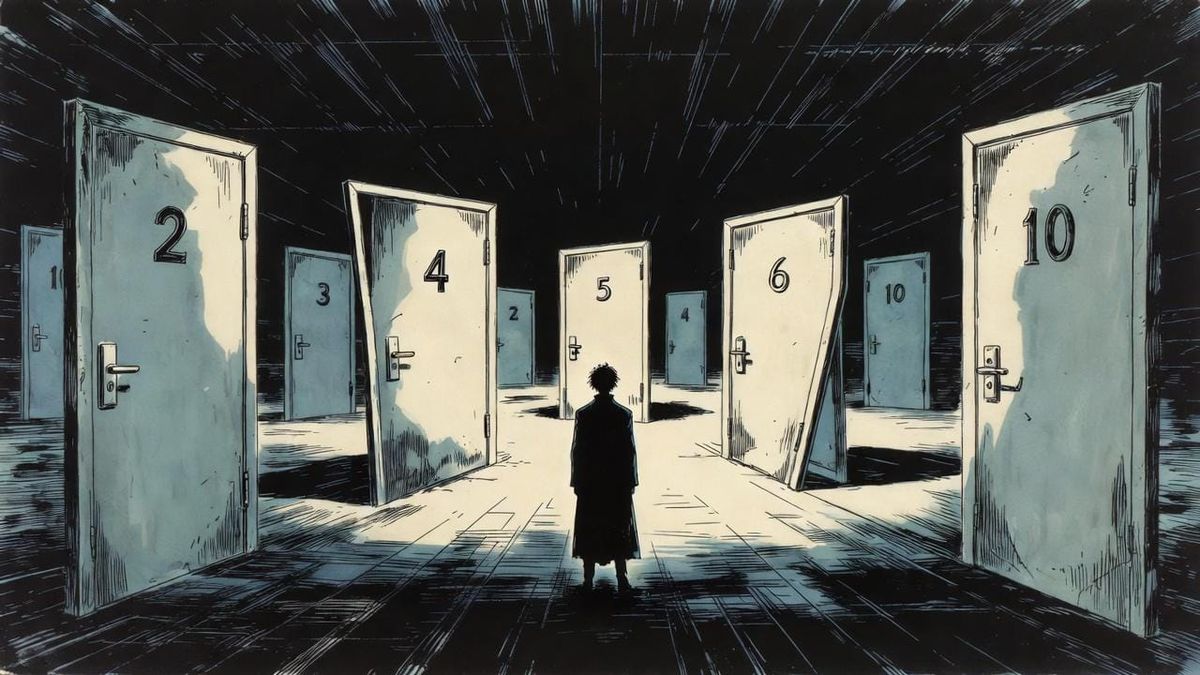
If you subscribe to Claude Pro, how many messages can you send per day? What about Claude Max? Here's the honest answer: no one knows, including the people paying $20 to $200 per month.
Anthropic's subscription pricing has become a masterclass in opacity. The company offers various tiers: Free, Pro ($17-20/month), Max ($100-200/month), Team ($20-100/seat), and Enterprise, but nowhere on their pricing page will you find concrete usage limits. The official documentation states limits "apply," but provides no numbers. Users are left to discover their quotas through trial and error, often mid-project.
This isn't an oversight. It's a business model.
The Discovery Principle: Limits Revealed Through Pain
The frustration is palpable. The r/ClaudeAI subreddit's "Usage Limits, Bugs and Performance Discussion Megathread" has become the highest-traffic post on the entire community: 1.8 million members, and the most active thread is about hitting walls.
But this isn't just a Reddit phenomenon. Tech publications have documented the pattern extensively. The core issue: Anthropic's documentation explicitly states that "usage limits apply across all tiers, yet provides no concrete numbers anywhere. Their own help center advises users to "monitor your consumption in Usage settings" and offers "best practices" for working within undefined limits—essentially teaching users to navigate a system designed to be opaque.
One user described their experience: "It was good but took me 1 day of regular work to finish the limit of the pro subscription. So today I needed it to go over 175 pages of documents and make a timeline. Had to divide it to like 7 individual files to be able to upload and pay $20 for extra time."
Another user articulated the core frustration: "There's no information about Pro's usage limit except 'it depends.' I use chatgpt daily for work... Some days I'll prompt it 10 times. Other days it'll be 100 times and I've never hit a usage limit. And I really don't want to hit a limit in the middle of an important project. And not knowing what I'm paying for just feels wrong."
This lack of transparency isn't accidental. It's strategic.
The Confusion Pricing Model
Anthropic's approach mirrors telecom companies before regulation: keep customers uncertain about what they're actually buying, and they'll over-consume out of fear, upgrade preemptively to "safer" tiers, or stay in a perpetual state of confusion that discourages switching.
The Pro plan promises "more usage" without quantification. The Max 5x plan promises "5x more usage than Pro." The Max 20x promises "20x more usage." But since Pro's limit is undefined, Max's limit is also unknowable. You're buying a multiplier of nothing: a ceiling that appears high but has no verifiable floor.
At $200/month for Max 20x, users expect unlimited access. They receive "only" 20x the undefined Pro limit. The psychology is deliberate: anchor users on the high price point, then deliver undefined value.
The Extended Context Trap
Anthropic's decision to default Opus to a 1 million token context window appears generous. In reality, it's a throttle in disguise.
Longer contexts consume dramatically more tokens. A 1 million token context means every conversation potentially burns through quotas many times faster than shorter interactions. Users feel they're getting "more" because the context window is larger, but they're actually burning through their undefined limits quicker.
This creates a self-reinforcing dynamic: larger contexts → faster limit exhaustion → more frustration → upgrade attempts → still undefined limits → user churn.
The Double Usage Cycle: Masking the Clamp-Down
Anthropic periodically offers "2 weeks of double usage rates": promotions that generate goodwill and positive press. But users report something troubling: after each "double" period ends, their normal usage hits limits faster than before.
The pattern suggests these promotions serve a dual purpose:
- Customer retention during periods of frustration
- Data collection to calibrate new, tighter limits
Each cycle appears to calibrate slightly tighter constraints while the "double" period masks the transition. Users report usage becoming "slimmer and slimmer" over time. The promotions aren't additions: they're palliative measures that mask deterioration rather than prevent it.
The API Cost Comparison
Anthropic's API pricing reveals the subsidy hiding in plain sight:
- Opus 4.6: $5/million input tokens, $25/million output tokens
- Sonnet 4.6: $3/million input, $15/million output
- Haiku 4.5: $1/million input, $5/million output
Compare to OpenAI's API, and Anthropic's rates are significantly higher. Yet consumer subscriptions cost far less than equivalent API usage would. This suggests heavy venture capital subsidies designed to acquire customers quickly.
The business implication: these prices cannot last. When VC funding runs out, or when Anthropic achieves sufficient market position, prices will "normalize." Existing customers will face retrospective price increases with no recourse.
The Workaround Economy
Faced with opaque limits, users have developed elaborate workarounds:
- Splitting documents into multiple smaller uploads to bypass per-message limits
- Maintaining multiple free-tier accounts and switching between them
- Using Claude API directly instead of subscriptions (ironically often cheaper for heavy users)
- Switching between AI providers mid-project when limits hit
Anthropic's help center itself documents caching strategies and "best practices" for stretching usage—essentially validating the workaround economy rather than solving the underlying problem.
The workaround culture is a telling indicator. When customers invest more effort in avoiding your product's limitations than in using your product's capabilities, something is fundamentally broken.
The Competitive Landscape: Why It Matters
Anthropic isn't alone in this game. OpenAI, Google, and others are all wrestling with the same fundamental challenge: LLMs are expensive to run, and consumer pricing hasn't caught up with reality. But the key difference is transparency.
ChatGPT Plus tells you roughly what you're getting: more messages, faster responses, access to advanced models. It's not perfect, but you can plan around it.
Google's Gemini Advanced takes a different approach entirely, bundling AI access with 2TB of Google One storage—providing transparent value beyond just AI interactions.
Anthropic's approach is fundamentally different—they've chosen opacity as a feature, not a bug.
This matters because when you sign up for Claude Pro or Max, you're essentially playing a game with unknown rules. You don't know how many messages you can send. You don't know how many projects you can work on. You don't know what triggers a limit. And when you hit that limit—which you will—there's no recourse, no explanation.
The User Experience: A Firsthand Account
Let me paint a picture of what the Anthropic subscription experience actually looks like in practice. You sign up for Claude Pro, excited to use AI for your coding projects. The first week goes great. You're building an application, refactoring code, asking Claude to help you debug. Everything works.
Then, on day eight, it happens. You're in the middle of a complex refactoring task. You've got a 500-line file you need to understand before making changes. You paste it into Claude and ask for an explanation.
Nothing happens. You try again. You get an error message: "Usage limit reached. Please try again later."
You check your account. There's no indication of how much you've used, what your limit is, or when it will reset. Just: "You've reached your limit."
Now you have a choice: wait (unknown duration), upgrade to Max ($100+/month), or switch to a different tool entirely. None of these are good options when you're in the middle of work.
This isn't hypothetical. This is the actual experience documented across multiple platforms—from Reddit threads to published user reviews.
The Business Model Question
Here's the fundamental question investors should be asking: what's the actual unit economics of Anthropic's subscription model?
If Pro costs $20/month and users can burn through their limits in a day of regular work, what's the lifetime value of a Pro subscriber? If users are hitting limits in hours, they're not getting $20/month of value—they're getting maybe $2-3 worth of compute. The subscription becomes almost free at that point, which means Anthropic is either losing money on every subscriber or quietly hoping users don't notice.
The "double usage" promotions compound this problem. During these promotions, heavy users—who would otherwise hit limits quickly—are essentially getting unlimited access for the price of a subscription. The cost to Anthropic during these periods must be substantial, which raises the question: why do it?
The answer seems to be that Anthropic is using these promotional periods as a form of usage data collection. By watching how users behave when limits are relaxed, they can calibrate exactly how tight to make the clamps going forward. It's a sophisticated form of A/B testing on their user base, with the users footing the bill for the experiment.
The Long-Term Implications
The subscription model Anthropic has built isn't just frustrating for users—it's unsustainable for the business. Here's why:
First, there's no path to profitability at current price points. If users are hitting limits in hours, they're not getting value proportional to what they're paying. But if Anthropic raises prices, they lose the competitive advantage of being cheaper than the alternatives.
Second, the opacity creates trust damage that compounds over time. Every user who hits an unexpected limit, every user who gets no explanation for why their access was cut off, every user who has to figure out workarounds to use the product they paid for—each of these is a user who's looking for the exit.
Third, the workaround economy is a ticking time bomb. Every user who learns to split documents, maintain multiple accounts, or switch providers mid-project is a user who's demonstrated that the product isn't sticky. They will leave the moment a viable alternative appears.
The Technical Reality: Why Limits Exist
To understand why Anthropic's limits are so aggressive, you need to understand the underlying economics. Running Claude, especially Opus, is expensive. We're talking about clusters of GPUs costing millions of dollars, each capable of processing only a limited number of tokens per second.
The fundamental problem is that LLM inference is a compute-intensive operation. Every token generated requires multiple matrix multiplications through the model's neural network. At scale, this adds up quickly. Anthropic's infrastructure costs per user are genuinely high.
The question becomes: how do you price a product where the marginal cost per user is genuinely uncertain and potentially quite high?
Anthropic's answer is to hide the limits entirely. By not publishing concrete numbers, they can dynamically adjust based on their actual costs. Some users consume $2/month of compute. Others consume $200/month. By keeping everyone in the dark, they avoid the awkward conversation about what they're actually charging for.
But this approach has a fatal flaw: users aren't stupid. They'll figure out the limits eventually—usually at the worst possible moment. And when they do, they remember.
The Claude Code Factor
There's an interesting wrinkle in this story: Claude Code, Anthropic's CLI tool for developers, appears to have its own separate and potentially even tighter limits than the chat interface.
Developers who rely on Claude Code for their daily workflow report running into limits even more frequently than chat users. The tool, marketed as a productivity booster for developers, becomes a bottleneck when you're in the middle of a coding session.
This creates a particularly ironic situation: developers—the users most likely to appreciate and pay for premium AI tools—are the ones most frustrated by the limits. They're also the users most likely to find alternatives.
Comparing the Alternatives
Let's be fair: Anthropic isn't the only AI provider with usage limits. Here's how the landscape shapes up:
ChatGPT Plus ($20/month): Offers GPT-4o access with reasonable limits. The exact limits aren't published either, but users report consistent behavior—generally enough for daily use without hitting walls.
Gemini Advanced ($20/month): Bundled with Google One, provides access to Ultra models. The value proposition is stronger because it comes with 2TB of storage and other Google perks.
Grok (Free/Premium): xAI's offering provides surprisingly generous free access. For users willing to put up with X integration, it's a viable alternative.
Anthropic ($20-200/month): Most expensive path to AI access, least transparent about limits, most likely to leave you stranded mid-project.
The math is straightforward: if you're hitting Claude Pro limits in a day, you're not saving money compared to alternatives. You're just getting worse service for the same price.
The Pattern Over Time
If you track Anthropic's behavior over the past year, a clear pattern emerges. Each "double usage" period is followed by tighter limits. Each relaxation is followed by restriction. The trajectory is always in one direction.
Users who were with Anthropic at launch report getting significantly less for the same price now than they did then. What felt generous a year ago now feels restrictive. And there's every reason to believe this trend will continue.
The business logic is clear: Anthropic needs to convert VC-subsidized users into profitable customers. The path there is through restrictions, not price increases. It's easier to quietly tighten limits than to announce a price hike and lose customers.
What Comes Next
The signs are already there if you know how to look. The "double usage" promotions are getting shorter. The limits after promotions are getting tighter. The explanations for why limits exist are getting vaguer. This isn't random—it's a carefully orchestrated transition from "generous" pricing to sustainable (read: higher) pricing.
If you're an Anthropic user, here's what I'd recommend: document your usage patterns. Keep track of when you hit limits, what triggered them, and how long it took to recover. This data will be valuable when the next round of "improvements" rolls out.
If you're considering Anthropic, go in with your eyes open. The subscription model is designed to hide constraints, not reveal them. Assume you'll hit limits, assume they won't explain why, and have a backup plan ready.
The subscription model exhibits classic unsustainable patterns: opaque pricing to hide constraints, artificial scarcity through undefined limits, VC-subsidized prices that cannot last, and community infrastructure to manage discontent rather than solve the underlying problem.
Anthropic may capture market share short-term with these tactics. But customer resentment compounds. Eventually, users vote with their feet, and by the time limits force that decision, the damage to trust is already done.
Found This Helpful?
Want to put this into practice? Lurkers get methodology guides. Contributors get implementation deep dives.