The Red Blue Mind Virus: Political Tribalism Through History
The concept of political tribalism is not new. From Roman senators to Protestant reformers to modern social media, the same cognitive virus has repeatedly divided populations and enabled elite manipulation.

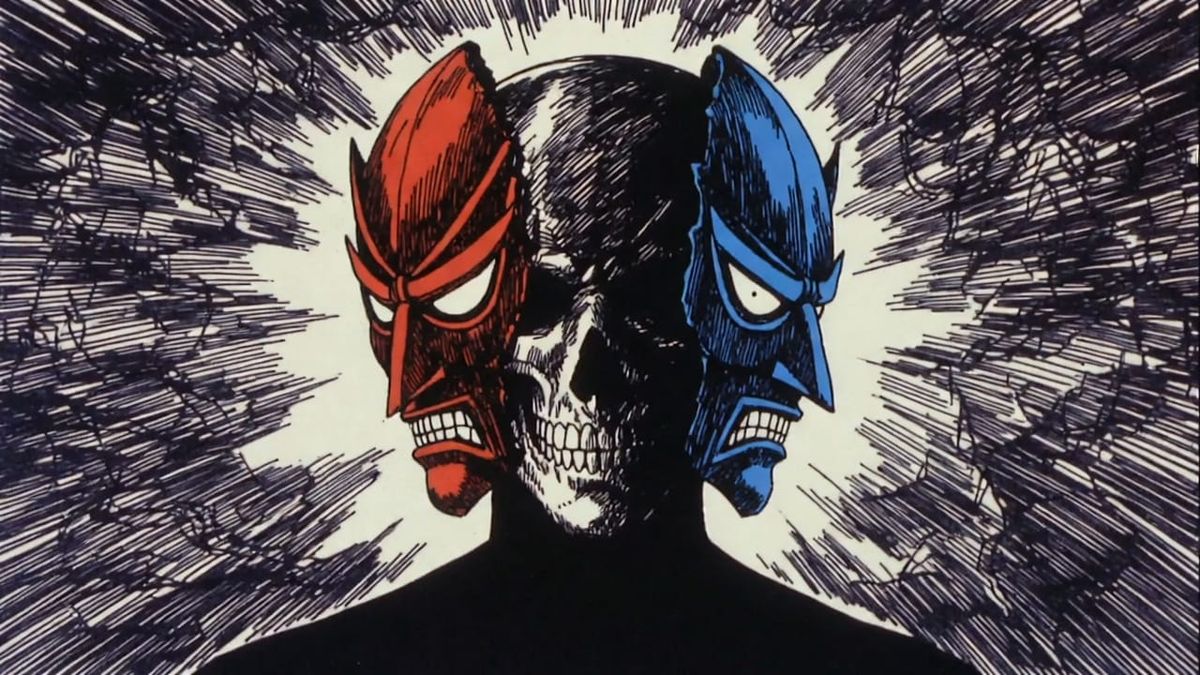
There is a virus that has afflicted every complex civilization in recorded history. It spreads through social networks with remarkable efficiency, exploiting our neurological wiring for tribal belonging until ordinary people turn against each other with devastating effectiveness. The virus does not kill the body, but it corrupts the mind completely, replacing independent thought with tribal loyalty and factual evaluation with identity protection. I call this the red blue mind virus, though history shows it wears many colors, many flags, many names.
I first encountered this concept years ago in podcast discussions by Crrow777, whose work at crrow777radio.com has explored these patterns of mass division and cognitive manipulation for over a decade. Crrow777 has spent years analyzing the mechanisms by which populations become divided and controllable through identity politics, long before such ideas entered mainstream discourse. His podcast explored how modern political identity functions as a kind of cognitive infection. The insight was not simply that people disagree, but that disagreement itself becomes psychologically impossible when identity is at stake. Once you have been labeled red or blue, conservative or liberal, your brain stops processing information objectively and begins defending territory instead. The video struck me because it described something I had observed my entire life but never possessed the framework to name. I decided to examine the historical record to see if this pattern had appeared before. The results were remarkable, and troubling.
The Neurological Basis of Tribalism
To understand why tribalism operates like a virus, we must first comprehend how profoundly limited the human brain is when it comes to social relationships. Anthropologist Robin Dunbar proposed that the human brain can maintain meaningful social relationships with approximately 150 individuals, a number now known as Dunbar's number. In his foundational paper "Neocortex size as a constraint on group size in primates" published in the Journal of Human Evolution (1992), Dunbar demonstrated through comparative analysis of primate brain sizes that there is a correlation between neocortex ratio and typical social group sizes. This cognitive limit shapes how humans organize societies, as documented in research on in-group and out-group dynamics.
This limitation is not a design flaw but an evolved adaptation. In the ancestral environment, living in small bands was essential for survival, and the brain developed sophisticated mechanisms for tracking in-group members versus potential threats. Modern humans inherit these same neural circuits, even when living in cities of millions. The brain simply cannot process millions of individuals as genuine social contacts, so it categorizes them into us and them, friend and enemy, trusted and untrusted. This categorization happens automatically, beneath conscious awareness, which is what makes the virus so difficult to resist.
The implications are significant. Every complex civilization has necessarily operated at scales far beyond Dunbar's number, yet our social cognition remains calibrated for small bands of roughly 150 people. Throughout history, societies have developed various mechanisms to bridge this gap, including religious identities, national identities, and political affiliations. These macro-tribes use the same psychological machinery as small-group kinship, but when millions share an identity, the emotional stakes become enormous, and the willingness to harm outsiders scales proportionally.
Psychologist Muzafer Sherif demonstrated this vulnerability dramatically in the 1954 Robbers Cave experiment. In his seminal work "Intergroup Conflict and Cooperation: The Robbers Cave Experiment" (1961, originally published 1954), Sherif placed 22 twelve-year-old boys in separate groups at a summer camp, then introduced competition for scarce resources. Within days, the boys had developed fierce in-group loyalty and intense hostility toward the out-group, despite being randomly assigned and initially friendly toward one another. The experiment showed that tribalism does not require pre-existing differences, deep ideological divides, or historical grievances. Create a group boundary, introduce competition for finite resources, and the brain does the rest. The virus needs no invitation, no ideology, no history. It simply requires the minimum social architecture to trigger our evolved tribal responses.
When Printing Met Tribalism: The Reformation
The printing press is often celebrated as a democratizing technology that spread knowledge, enabled the Scientific Revolution, and connected humanity across distances previously unimaginable. Less appreciated is how the same technology enabled one of the bloodiest periods in European history. When Martin Luther posted his 95 Theses in 1517, he intended to reform the Catholic Church, to challenge the sale of indulgences and the corruption of the ecclesiastical hierarchy. Instead, his ideas spread through networks of correspondence and pamphlet distribution with unprecedented speed, finding receptive audiences in regions that already resented ecclesiastical wealth and political interference.
Historian Niall Ferguson explored this phenomenon in his Foreign Affairs article "The False Prophecy of Hyperconnection: How to Survive the Networked Age" (September/October 2017). Ferguson noted that network effects of the printing press created homophily and polarization that the Catholic Church could not control through its existing communication hierarchy. He further developed these ideas in his book The Square and the Tower: Networks, Hierarchies and the Struggle for Global Power (2018), drawing parallels between the Reformation era and modern social media networks. The result was not unity but fragmentation, with regions defining themselves as Protestant or Catholic in ways that justified violence against neighbors who had been coexisting for generations.
The lesson is not that printing was bad technology but that new communication technologies amplify whatever tribal viruses already exist in a population. Luther imagined a priesthood of all believers, a global community of individual conscience where each person could read scripture directly and maintain a personal relationship with God. What he got was the fragmentation of Christendom into warring identity groups that consumed each other for over a hundred years. The printing press democratized information, but it also democratized tribalism, allowing hatred to spread as efficiently as truth.
The Roman Republic: Optimates Against Populares
Ancient Rome offers a cautionary example of how political divisions can become tribal identities that destroy the very systems they were meant to sustain. The late Roman Republic was defined by the conflict between the Optimates and the Populares. The Optimates, whose views were articulated by Cicero in his speech Pro Sestio (delivered 56 BC), represented the senatorial aristocracy and traditional Roman institutions. The Populares, conversely, championed plebeian interests and popular sovereignty, using the tribal assemblies as a means to challenge senatorial authority. These were not merely policy disagreements but identity groups that defined themselves in opposition to each other, with genuine hatred developing between factions that had once shared power and friendship.
The Optimates and Populares represented different visions of what Rome should be, but the conflict between them escalated beyond policy into existential struggle. Each faction came to see the other as an existential threat to the Republic itself, and violence became normalized as senators hired gangs, clashed in the streets with gladiators and slaves at their command, and eventually called upon military commanders to settle disputes through force. The Republic did not fall because of external invasion, though that would come, but because internal tribal warfare made governance impossible.
What is most instructive is how quickly personal relationships gave way to tribal loyalty. Men who had been friends for decades, who had shared political careers and family ties and business interests, found themselves on opposite sides of civil conflict that permitted no neutral ground. Family connections meant nothing against the logic of faction. The tribal virus had infected Roman politics so thoroughly that the only remaining question was which tribe would consume the other. Caesar and Pompey, once allies and colleagues, became enemies. Cicero, the greatest orator of his age, was hunted down and murdered for his political affiliations. The Republic did not die overnight; it was torn apart piece by piece by tribal loyalty that permitted no compromise.
The French Revolution: The Terror Within
The French Revolution began with high ideals of liberty, equality, and fraternity. The revolutionaries sought to dismantle the ancien regime and create a new society based on reason, rights, and the sovereignty of the people. Within a few years, the same revolution had descended into the Terror, a period of systematic violence documented in historian Simon Schama's "Citizens: A Chronicle of the French Revolution" (1989). During the Terror, revolutionary tribunals executed at least 17,000 people officially, with perhaps 10,000 more dying in prison or without trial, as documented by Encyclopaedia Britannica. Many of those executed were former allies who had fallen under suspicion.
The Jacobins who led the Terror were not cynical power seekers but true believers in the revolution's ideals. They wanted equality, they wanted an end to aristocratic privilege, they wanted a government that served the people rather than the other way around. The problem was that revolutionary purity became the criterion for loyalty, and purity is a moving target. Each faction accused the other of treason, of betraying the revolution, of being enemies of the people. The definitions of enemy shifted constantly, consuming one revolutionary leader after another until the tribunal that had condemned others was itself condemned and its members sent to the same guillotine they had so freely employed against others.
Historical accounts of the period describe how the revolution created its own tribal logic that no individual could escape. To question the current leadership was to betray the revolution. To suggest moderation was to side with the aristocrats. To have any hesitation was to be suspect. The virally tribal structure of revolutionary politics made it impossible to maintain the original ideals while also surviving politically. The result was that the revolution ate its own children, and when it was finally over, the people were exhausted, impoverished, and longing for order above all else. Within a decade, Napoleon would crown himself emperor, and the revolutionary moment would be remembered as a fever dream that had accomplished nothing except to redistribute property and power to new owners.
American Tribalism: Red Scares and Their Aftermath
The United States has experienced multiple episodes of intense political tribalism, each following the same pattern of identifying internal enemies and demanding loyalty tests. The McCarthy era of the 1950s exemplifies how quickly political disagreement can transform into tribal warfare that destroys not only the accused but the accusers and the entire society that permits such accusations to stand unchallenged.
Senator Joseph McCarthy and his supporters identified communism as the defining threat to American society, and in doing so they created a tribal framework that permitted no nuance. The response was a cascade of loyalty investigations, blacklists that destroyed careers in entertainment and government, and public accusations that ruined lives with no due process. As documented in Richard M. Fried's "Nightmare in Red: The McCarthy Era in Perspective" (1990), these programs led to the destruction of careers based on often-unsubstantiated associations with so-called subversive organizations. The targets were often not communists but simply people who had left-leaning associations at some point, who had read the wrong books, or who worked in industries that attracted artists and intellectuals who were considered suspect by their very nature.
What made McCarthyism possible was not merely political disagreement but the tribal infrastructure that converted disagreement into identity. Accused individuals found themselves outside the tribe regardless of their actual beliefs. The accusation itself was sufficient for condemnation in the court of public opinion, and those who might have defended the accused instead remained silent to protect themselves, reinforcing the impression that the accused had no legitimate defenders. The virus required only that enough people accept its premises, regardless of whether the accused were actually guilty of anything except wrong associations and wrong thinking. Many of those who participated in the witch hunts later expressed regret, but the damage to individual lives and to the social fabric had already been done.
Modern Networks: Social Media and the Algorithm
Contemporary political polarization in the United States and other democracies shows the same tribal dynamics operating through new technological infrastructure that was supposed to connect humanity but instead has created unprecedented divisions. Social media platforms were designed to connect people across distances and differences, but their algorithms optimize for engagement, and engagement is maximized by outrage and tribal confirmation.
Research on social networks has documented how homophily creates clusters that reinforce shared beliefs while systematically excluding contrary evidence. In their Cambridge University Press volume "Social Media and Democracy" (2020), researchers examined how platform algorithms amplify selective exposure and create echo chambers. The result is not merely disagreement but mutual incomprehension, where opposing sides operate with different factual premises and different interpretive frameworks. The network structure amplifies whatever tribal viruses exist in the population, and the speed of modern communication means that tribal outbreaks can achieve pandemic proportions before any corrective measures can be implemented.
The consequences extend beyond politics into the basic capacity for shared reality. Studies of partisan voters show that factual information often fails to change opinions when the facts threaten tribal identity. The brain processes information through tribal filters that reject threatening content regardless of its accuracy. This is not a failure of education or intelligence but a feature of how human social cognition operates under identity threat, as documented in research on motivated reasoning and identity-protective cognition. The virus does not care how smart you are; it operates beneath conscious reasoning, exploiting the same mechanisms that kept our ancestors alive in small bands where group loyalty was literally a matter of survival.
The Pattern Behind the Pattern
What emerges from examining these historical examples is not a conspiracy but a pattern that has repeated across civilizations and centuries. The tribal virus exploits social cohesion mechanisms that are otherwise essential for human survival. Group loyalty, shared identity, and willingness to defend the in-group against out-groups are adaptive traits that enabled human cooperation at scales that smaller primates cannot match. The same mechanisms that enable armies to fight and nations to form also enable manipulation by those who benefit from division.
Throughout history, elites have learned to exploit tribalism rather than create it. The tribal virus spreads through existing social networks, finding receptive audiences among people who already share group identity. Those who seek to divide populations do not need to manufacture tribalism from scratch; they need only identify existing fault lines, amplify perceived threats from the out-group, and provide tribal leadership that frames disagreement as existential conflict. The specifics change: sometimes the divide is religious, sometimes political, sometimes ethnic or national or some combination of these identities. The structure remains constant.
This pattern appears in Roman politics, where senators exploited factional conflict to prevent reforms that might have threatened aristocratic privilege. It appears in religious conflicts, where authorities mobilized tribal identity against reformers whose challenges to the existing order threatened those who profited from that order. It appears in political scares, where demagogues identified enemies whose destruction would benefit those who directed the accusations while appearing to serve the public interest. The specific content changes with circumstances, but the underlying structure of tribal manipulation remains as consistent as the neurology that makes it possible.
Recognizing the Virus
Understanding tribalism as a virus offers some protection against infection, though not immunity. The key insight is that tribal cognition operates differently from individual reasoning, and recognizing this difference is essential for maintaining independent judgment. When identity is at stake, the brain shifts from open inquiry to territory defense, and this shift happens automatically, beneath conscious awareness. The same neural machinery that kept our ancestors safe in small bands now threatens to tear apart complex societies.
Historical parallels can help calibrate current observations and provide emotional distance from contemporary conflicts. When someone claims that opposing political views constitute an existential threat, the Reformation and its aftermath offer a cautionary example of how such framing leads to violence. When accusations replace evidence in political disputes, the McCarthy era demonstrates the human cost of tribal thinking that permits accusation to substitute for proof. When new communication technologies promise to connect humanity but produce division instead, the printing press and the religious wars it enabled provide perspective on how technologies amplify existing viruses.
The virus cannot be eliminated because it exploits fundamental features of human cognition that we did not choose and cannot simply override through willpower or education. But the historical record shows that populations have recovered from tribal epidemics before, often after exhausting the resources that conflict consumed. The question for each generation is whether recognition of the pattern can accelerate recovery or whether the pattern must run its course before the population develops resistance. The virus is ancient, but therefore so is the recovery.