The Lost Cathar Gospel: Reincarnation, Dualism, and the Vatican's Erased Christianity

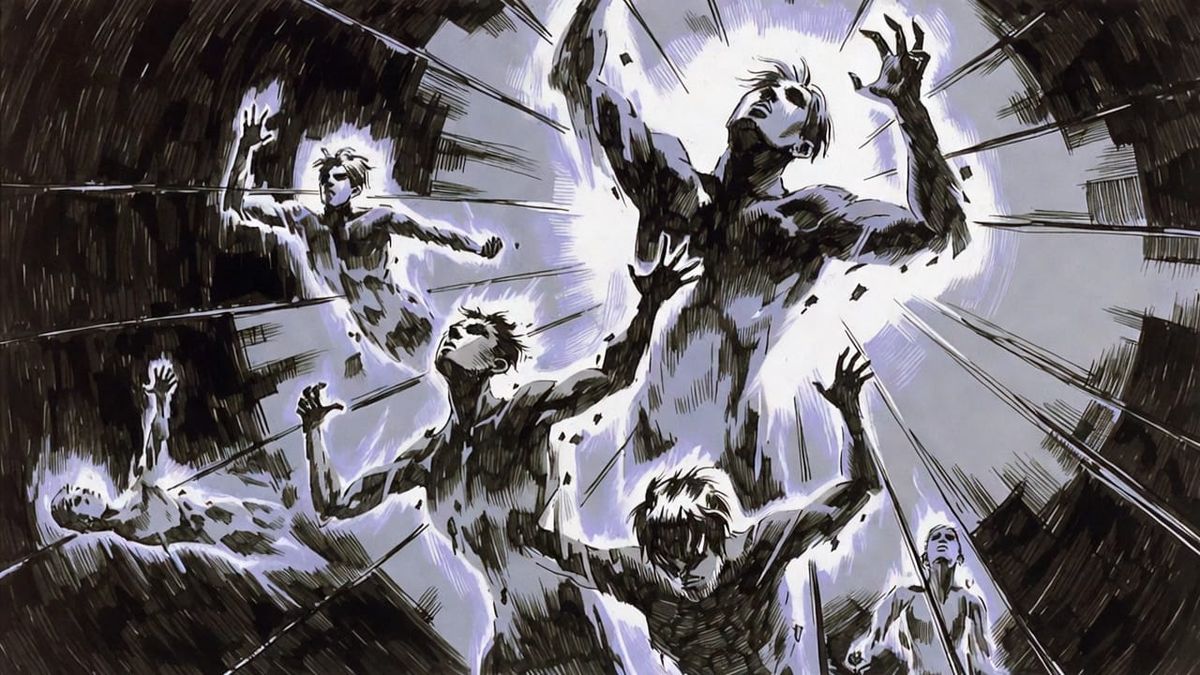
In the shadowed valleys of medieval Languedoc, a vibrant alternative Christianity flourished. This faith challenged the foundations of papal authority, embraced reincarnation as a path to divine liberation, and viewed the material world as the creation of an evil god. These were the Cathars, also known as the Albigensians or Good Christians, a dualist mystical sect whose teachings echoed esoteric streams of early Gnostic Christianity. Brutally suppressed by the Catholic Church through the Albigensian Crusade (1209-1229) and the Medieval Inquisition, their scripture was systematically hunted and destroyed, their communities massacred, and their memory nearly erased.
Yet centuries later, their story resurfaced not through dusty archives alone, but through the vivid, verifiable past-life memories of ordinary 20th-century individuals. Psychiatrist Arthur Guirdham's 1970 book The Cathars and Reincarnation documents a British schoolgirl's spontaneous recollections of life as a 13th-century Cathar Perfect (one of the sect's ascetic elite). Her detailed accounts of names, family ties, events, and daily rituals matched obscure Inquisition records and historical facts unknown to scholars at the time. In effect, these reincarnated souls rewrote fragments of the lost Cathar gospel, breathing life into teachings the Vatican had sought to obliterate.
This is no mere footnote in medieval history. The Cathars represent a suppressed strand of Christian mysticism that parallels later esoteric movements like Rosicrucianism, emphasizing inner gnosis (direct spiritual knowledge), soul evolution through rebirth, and rejection of corrupt ecclesiastical power.
The Historical Rise of Catharism: A People's Christianity in Languedoc
Origins and Early Development
Catharism emerged in the 11th-12th centuries amid widespread discontent with the Roman Catholic Church's worldliness, clerical corruption, and feudal excesses. The name Cathar derives from the Greek word katharos, meaning pure or clean, a name they embraced as a marker of their spiritual distinction from what they viewed as the corrupted mainstream Church Leglu, Rist & Taylor, The Cathars and the Albigensian Crusade: A Sourcebook.
The movement drew from a complex web of influences: Bogomilism from the Balkans, which itself traced roots to ancient Gnostic and Manichaean dualist traditions. The Bogomils preached that the world was created by Satan, not God, and that Christ was an emissary of the true God sent to liberate souls from material bondage. These ideas found fertile ground in southern France, particularly in Languedoc, where a culture of tolerance had developed over centuries Lambert, The Cathars.
Centered in southern France's Languedoc region (including Toulouse, Albi, and Carcassonne) and parts of northern Italy, Catharism spread rapidly through trade routes and cultural connections. By the mid-12th century, Cathar communities had established themselves throughout the region, organized into dioceses with bishops, deacons, and the elite Perfecti (or Perfects) Wakefield & Evans, Heresies of the High Middle Ages.
The Structure of Cathar Society
Unlike the hierarchical, Rome-centered Catholic Church, Cathars emphasized equality among believers. Women could become Perfects, preaching and administering rites alongside men, a radical departure from medieval gender norms. This egalitarian structure attracted followers across all social classes, from peasants to nobility Costen, The Cathars and the Albigensian Crusade.
The Perfects lived in strict poverty, chastity, and asceticism. They sustained themselves through manual labor and the support of lay Believers (Credentes), who admired their holiness without fully committing to the rigorous lifestyle. This two-tier system created a spiritual elite that inspired laity through example rather than institutional power Leglu, Rist & Taylor.
Languedoc: A Distinct Culture
The Languedoc region developed a unique cultural identity, distinct from northern France. With its own language (Occitan), troubadour poetry tradition, and reputation for religious tolerance, Languedoc had long been a crossroads of Mediterranean civilizations. Jews and Muslims lived relatively free from persecution compared to other regions of Europe, and alternative religious movements found fertile ground among a population increasingly disillusioned with the wealth and corruption of the Catholic Church Oldenbourg, Massacre at Montsegur.
Nobles like Count Raymond VI of Toulouse, the greatest baron of Languedoc, protected Cathar leaders even after papal excommunication. The movement had its own bishops, its own churches, and its own theology, maintained by a hierarchy of Perfecti who lived in strict poverty and chastity des Vaux-de-Cernay, The History of the Albigensian Crusade.
The Church's Growing Alarm
The Catholic Church watched these developments with mounting alarm. Between 1022 and 1179, eight separate church councils condemned Catharism as heretical. The Church attempted diplomatic solutions: sending missionaries, urging secular authorities to act against heretics, and negotiating with local nobles Moore, The War on Heresy.
Pope Innocent III, elected in 1198, made the elimination of heresy his supreme priority. He viewed Catharism not merely as doctrinal error but as an existential threat to the Church's authority and the social order it legitimized. The corruption of local clergy, the protection of powerful nobles, and the genuine appeal of Cathar teachings combined to make the movement unstoppable through preaching alone Sumption, The Albigensian Crusade.
The Murder That Started a Crusade
Pierre de Castelnau's Death
The breaking point came in January 1208, when Pierre de Castelnau, a papal legate, was murdered while returning to Rome after excommunicating Count Raymond VI of Toulouse for his continued protection of Cathars. The pope held Raymond responsible, declaring de Castelnau a martyr. Within months, Innocent III called for a crusade against the Cathars and their protectors in Languedoc, offering the lands of the heretics to any French nobleman willing to take up arms, with the same indulgences granted to crusaders fighting in the Holy Land des Vaux-de-Cernay.
The response exceeded all expectations. Northern French knights, landless, restless, and hungry for plunder, flocked to the cause. What began as a religious campaign quickly became a war of conquest against the wealthy, independent south McGlynn, Kill Them All.
The Massacre at Beziers
The crusade's brutality shocked even contemporaries. In July 1209, the crusaders sacked the city of Beziers, massacring almost the entire population, perhaps 20,000 people, regardless of whether they were Cathars or Catholics, Jews or Muslims. When asked how to distinguish heretics from the faithful, papal legate Arnaud Amalric reportedly gave the infamous order: "Kill them all. God will know His own" des Vaux-de-Cernay.
This massacre demonstrated that the campaign was not merely about conversion but conquest. The surviving cities of Languedoc, knowing what fate awaited them, surrendered without resistance to the overwhelming force of the crusading armies Oldenbourg.
The Fall of the Strongholds
Simon de Montfort, a northern French nobleman, took command of the crusade and began the systematic reduction of Cathar strongholds. City after city fell through siege warfare and intimidation. By 1215, he controlled most of the region. Resistance continued sporadically as the southern lords who had lost their lands revolted repeatedly, finding support among a population that had not accepted northern French rule. Simon de Montfort was killed during one such siege in 1218 Puylaurens, Chronicle.
The French crown eventually took direct control. Louis VIII led a new crusade in the 1220s, and Louis IX (later Saint Louis) completed the conquest. The Treaty of Paris in 1229 formally ended the conflict, bringing Languedoc under royal control and arranging the marriage of Louis IX's sister to Raymond VII of Toulouse's daughter, effectively ending the independence of the great southern lords Sumption.
The Last Stronghold: Montsegur
Yet military conquest alone could not eradicate Catharism. The Inquisition was established by the papacy in the 13th century to eliminate remaining believers through systematic investigation and prosecution. Dominican friars, trained in theology and law, traveled from village to village, receiving accusations, conducting trials, and sentencing heretics to death by fire Wakefield & Evans.
The last major Cathar stronghold, Montsegur, fell in March 1244. Over 200 Perfects who had gathered there chose death over conversion. They were burned alive on a massive pyre at the foot of the mountain, a final witness to their faith that shocked even hardened observers Oldenbourg. By the 1320s, the last known Cathar Perfect had been burned. Within another generation, the movement had ceased to exist as an organized religion Le Roy Ladurie, Montaillou.
Core Theological Beliefs: Dualism, Reincarnation, and the Path to Liberation
Absolute Dualism: Two Gods in Cosmic Conflict
At Catharism's heart lay absolute dualism: two eternal principles locked in cosmic conflict. The good God, whom they called the God of Love, or simply the Father, created the spiritual realm and watched over the fate of pure souls. The evil god, also known as the Demiurge, Rex Mundi (King of the World), or Satan, created the corrupt material universe and all that dwells within it The Book of the Two Principles.
This cosmology carried profound implications. If the physical world was created by an evil force, then human bodies were prisons rather than temples. The Cathars taught that human souls were originally angels who had fallen from heaven, seduced by Satan before or during the War in Heaven, and trapped in material bodies as punishment. These souls were destined to cycle endlessly through reincarnation until they could finally escape the material realm and return to God Lambert.
The Nature of Christ and Salvation
The Cathar understanding of Jesus reflected this dualism. They revered Christ but denied his physical incarnation. To the Cathars, Jesus was an angel, a being of pure spirit, who only appeared to have a physical body. His teachings should be understood allegorically, not literally. The accounts of his crucifixion and resurrection in the New Testament were symbolic, representing the soul's journey from the material world back to the spiritual realm. The physical cross was not a symbol of salvation but an instrument of torture, emblematic of the evil material world Interrogatio Iohannis (Secret Supper).
Salvation, in Cathar theology, was not about believing in Christ's atonement for sins but about achieving liberation from the cycle of reincarnation. The path to this liberation required spiritual purification and the rejection of all material attachments.
Reincarnation: Metempsychosis and Soul Evolution
Reincarnation, termed metempsychosis or transmigration of souls, was central to Cathar belief. Souls, sexless and angelic in origin, cycled through endless rebirths in human and animal bodies until achieving final liberation. This cycle stemmed from the evil god's trap: each life offered chances to renounce materiality, but most souls faltered, reincarnating to suffer anew [Guirdham, The Cathars and Reincarnation].
The Cathars believed that even animals could carry human souls trapped in the cycle. This led to their characteristic vegetarianism, not for ethical reasons, but because eating meat meant consuming vessels that might contain human souls seeking liberation Cathar Ritual (Lyon Ritual).
The Consolamentum: Gateway to Spiritual Freedom
Central to Cathar practice was a ritual called the consolamentum, a spiritual baptism administered through the laying on of hands. Unlike Catholic baptism, which used water and could be performed on infants, the consolamentum conferred forgiveness of sins and initiated the recipient into the higher spiritual state of the Perfecti. The ritual could be performed by anyone, not just ordained priests, reflecting the Cathar belief in the priesthood of all believers Cathar Ritual.
Most believers received the consolamentum only when death approached, as a final liberation from the cycle of reincarnation. Upon dying in this state of spiritual purity, the soul could finally escape the material world and return to God. Some who recovered after receiving the consolamentum chose to undergo the endura, a rigorous fast that would lead to death within days. This ensured they would not sin again and lose their hard-won spiritual freedom [Guirdham].
Ascetic Practices and Daily Life
The Perfects practiced strict asceticism: they abstained from meat, eggs, cheese, and milk because these substances were products of sexual reproduction, which they considered inherently sinful. Fish were permitted because aquatic creatures were believed to arise through spontaneous generation, without the taint of sexual union Costen.
This vegetarian diet, combined with their rejection of sexual activity and material possessions, made the Perfecti living examples of escape from the material world. They worked alongside laypeople, performing manual labor and offering spiritual guidance without accumulating wealth or power.
Surviving Cathar Texts
Only a handful of Cathar writings survived the systematic destruction. The most important is the Book of the Two Principles (Liber de duobus principiis), which elaborates the dualist theology attributed to John of Lugio, an Italian Cathar bishop of the 13th century. The Cathar Ritual (Lyon Ritual) preserves fragments of their ritual practices. These documents survived only because the Church preserved them as evidence for trials Gnosis.org Library.
The Persecution and Destruction of Memory
The Inquisition's Methods
The Inquisition proved devastatingly effective. Its methods were sophisticated by medieval standards: networks of informants, interrogation under torture, and detailed records preserved for posterity. Suspects were encouraged to name others, creating cascading networks of accusation that spread through entire communities Wakefield & Evans.
The Inquisition's archives preserve some of our most valuable information about Cathar beliefs and practices, though filtered through the lens of the accusers. Inquisitors were trained to identify signs of heresy: refusing to eat meat, avoiding confession, showing familiarity with spiritual matters beyond the Catechism. These same traits, ironically, characterized the most devout Catholics of the region Le Roy Ladurie.
The Genocide of the Cathars
The violence of the Albigensian Crusade exceeded even the brutality of campaigns against Muslim territories. Casualty estimates range from 200,000 to perhaps a million, a staggering proportion of Languedoc's population. Raphael Lemkin, who coined the term genocide in the 20th century, specifically cited the destruction of the Cathars as an example of what he meant McGlynn.
Some scholars debate whether Catharism constituted a genuine religious movement or whether the medieval Church invented or exaggerated the threat for political purposes. The movement lacked central organization, and regional variations in belief were significant. Yet the historical record is unambiguous: thousands of people were willing to die for their faith rather than renounce it Pegg, A Most Holy War.
The Destruction of Texts
The Church did not merely destroy the people who held Cathar beliefs. It systematically destroyed their texts. The 1229 Council of Toulouse forbade lay possession of Scriptures, reflecting broader fears of unmediated faith. Only fragments survived, preserved accidentally in the archives of their persecutors Leglu, Rist & Taylor.
This pattern of deliberate amnesia recurs throughout history: the burning of the Library of Alexandria, the suppression of indigenous religions in colonized territories. The Church's campaign against the Cathars represents a medieval instance of what we would now call cultural genocide, the eradication not just of people but of their ideas, their texts, their entire way of understanding the world.
The Reincarnation Revival: Arthur Guirdham and the Rewritten Gospel
A British Woman's Memories
The story of Catharism might have ended there, erased from memory like so many other suppressed traditions. Yet in the 20th century, a British psychiatrist named Arthur Guirdham brought renewed attention to the Cathar legacy. In his 1970 book The Cathars and Reincarnation, Guirdham documented a remarkable case: one of his patients, a British woman known as Mrs. Smith, had begun recalling past-life memories of being a 13th-century Cathar Perfect [Guirdham].
What distinguished Guirdham's account from typical reincarnation stories was the specificity of the memories and his subsequent verification of historical details. The woman described places, events, and individuals that Guirdham was able to confirm through research into the historical record. She claimed to have been present at the siege of Montsegur, the last Cathar stronghold, which fell in 1244 Psi Encyclopedia.
Verification Against Historical Records
Guirdham, initially skeptical, conducted extensive research. The woman's memories included details about daily life in 13th-century Languedoc, names of individuals, family relationships, and specific events that matched the historical record. She described the consolamentum ritual, the endura fasting practice, and other aspects of Cathar belief and worship that aligned with what scholars knew from Inquisition records and surviving texts [Guirdham].
Even more remarkably, a small circle of other individuals later emerged with similar memories, suggesting the possibility of group reincarnation. Some had been patients or acquaintances of Mrs. Smith; others were unrelated but shared memories of the same historical period and location.
Scholarly Reception
Guirdham's work has been criticized by scholars. Ian Wilson, in his critical examination of reincarnation claims, noted serious errors and inconsistencies in Guirdham's research. Mainstream historians regard the reincarnation aspects as unverified. Yet even critics acknowledge that Guirdham's work brought renewed scholarly attention to a historical tradition that might otherwise have remained obscure Psi Encyclopedia.
Whether through verified coincidence, unconscious knowledge (cryptomnesia), or something more mysterious, the accounts preserved historical details that matched the scholarly record. In effect, these reincarnated souls rewrote fragments of the lost Cathar gospel, breathing life into teachings the Vatican had sought to obliterate.
Theological Implications and Modern Relevance
Reincarnation and Christian Orthodoxy
The suppression of Catharism raises uncomfortable questions about the nature of religious authority and the cost of conformity. What forms of Christianity might have developed in Europe if the Crusaders had not destroyed the Cathar churches? What critiques of Catholic corruption might have emerged if the institutional Church had faced genuine competition? O'Shea, The Perfect Heresy.
The parallels to contemporary concerns are striking. The Cathars' emphasis on reincarnation echoes modern interest in karma and past lives. Their vegetarianism and reverence for animal souls anticipates contemporary animal rights movements. Their dualism, the struggle between good and evil forces in the cosmos, appears in various forms throughout Western esotericism.
The Question of Heresy and Orthodoxy
The Cathars criticized the wealth and power of the clergy, rejected the sacramental system, and emphasized personal spiritual transformation over institutional mediation. These themes resonate with Protestantism a century before Luther, and with modern spiritual movements that reject institutional religion entirely Lambert.
The systematic destruction of Cathar texts illuminates how historical memory is constructed and contested. The Church did not merely defeat an opponent; it attempted to erase that opponent from existence. The texts were burned, the buildings destroyed, the names of the dead obliterated. Only fragments survived, preserved by accident in the archives of the victors.
Yet something survived. Not merely in Guirdham's controversial reincarnation cases but in the persistent cultural memory of Languedoc, where Cathar castles still stand as monuments to a lost world. In the scholarly revival of interest in Gnosticism and alternative Christianities. In the ongoing questions about what counts as legitimate religious authority and what happens to traditions that challenge dominant institutions.
Parallels with Rosicrucian Mysticism: Esoteric Continuities
An Underground Perennial Philosophy
The Cathars' mystical Christianity resonates with later esoteric movements, particularly Rosicrucianism, the 17th-century movement blending Hermeticism, alchemy, and Christian gnosis. Both emphasize inner transformation over external ritual, soul evolution (Rosicrucians incorporate rebirth cycles), and rejection of dogmatic hierarchy Rosicrucian manifestos, Fama Fraternitatis.
Rosicrucian manifestos speak of a universal reformation through hidden wisdom, much as Cathars claimed apostolic purity amid corruption. Esoteric historians trace continuities: Gnostic streams flowing through Cathars to later adepts, including Templars and Rosicrucians. Both traditions value gender equality, symbolic alchemy (transmuting base matter/soul), and direct divine encounter. The rose-cross symbol evokes Cathar purity amid suffering, symbolizing resurrection through trials.
This link suggests an underground perennial philosophy within Christianity, mystical, reincarnational, and resilient against persecution. The Cathars were neither the first nor the last to seek direct experience of the divine beyond institutional mediation.
Conclusion: Lessons from the Ashes
The Cathars were not destroyed; their gospel echoes through reincarnated witnesses and scholarly recovery. Their dualist mysticism, once deemed heretical, offers timeless wisdom: the material world's illusions demand spiritual vigilance, true faith liberates through knowledge and renunciation, and divine truth endures beyond flames and edicts.
In today's fragmented spiritual landscape, their story calls for humility in orthodoxy, openness to suppressed voices, and recognition that Christianity's diversity has always been its strength. As Guirdham's evidence suggests, souls remember what institutions forget. The Cathar light, reincarnated, resilient, invites us to reclaim a fuller, more mystical faith.
May their Perfecti's example inspire us all: to live as good Christians, seeking the good God beyond the veil of matter.