The Science and Practice of Fasting: From Intermittent to Extended Fast
From daily OMAD to multi-week extended fasts, exploring the science behind fasting's metabolic benefits and the practical realities of sustained fasting practice.

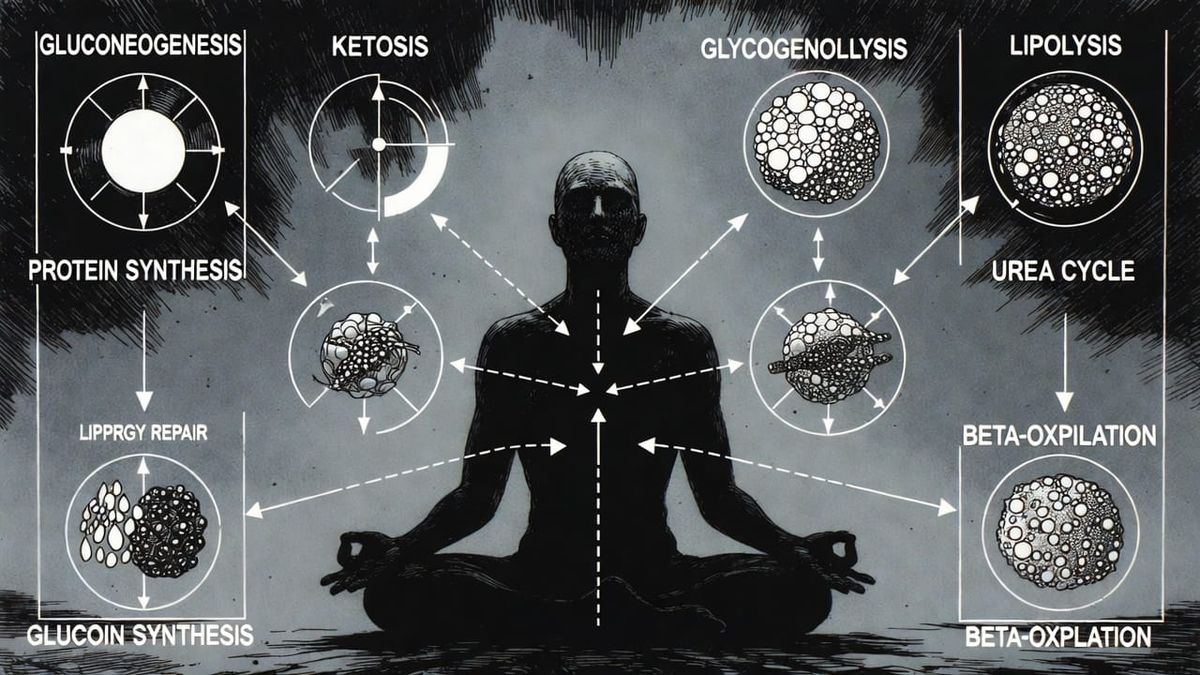
Fasting seems counterintuitive. Eat nothing to improve your health. Skip meals to gain energy. The research suggests this isn't just folk wisdom or wellness trends. It's physiology.
After years of practicing one meal a day (OMAD) and extended fasts lasting weeks, I've experienced both the science and the reality. This isn't about willpower or aesthetics. It's about understanding what happens when you stop providing constant fuel and your body shifts into repair mode.
What Fasting Actually Does to Your Body
The conventional wisdom about metabolism goes something like this: eat frequent small meals to keep your furnace stoked, or your body will think it's starving and shut down. The research doesn't support this view.
When you fast, several hormonal changes occur simultaneously. Insulin drops dramatically, which matters because high insulin locks fat in storage. Human growth hormone (HGH) increases significantly, supporting fat loss while preserving muscle mass. Norepinephrine rises, temporarily boosting metabolic rate by 3-14% rather than the crash predicted by conventional wisdom.
Research published in the National Institutes of Health database shows these aren't just correlations. The studies demonstrate causation through measurable hormonal changes and metabolic markers.
Your cells also initiate autophagy, a process of cellular housekeeping where they digest and remove damaged proteins. The word comes from Greek: "self-eating." This isn't pathological; it's adaptive. Cells use fasting periods to perform maintenance they don't have time for when constantly processing nutrients.
Gene expression changes during fasting as well. Sirtuins, a class of proteins associated with longevity, become activated. Research shows fasting increases expression of genes related to stress resistance and longevity pathways.
Intermittent Fasting Methods: From 16:8 to OMAD
The most common intermittent fasting approach is 16:8, where you fast for 16 hours and eat within an 8-hour window. This typically means skipping breakfast and eating between noon and 8 PM, though you can shift the window based on your schedule.
More aggressive is one meal a day, which I've practiced for years. That's a 23-hour fast with a single meal, usually in the evening. The adaptation period is real: expect about two weeks of hunger, fatigue, and cravings before your body shifts to using fat for fuel between meals.
Some people use a 5:2 approach, eating normally five days a week and restricting to 500-600 calories on two non-consecutive days. Others practice eat-stop-eat, with 24-hour fasts once or twice weekly.
Each approach has different trade-offs. 16:8 is sustainable for most people long-term. OMAD requires more adaptation but simplifies life around food decisions. Extended protocols like 5:2 introduce deeper metabolic shifts but require careful attention to overall nutrition.
My Experience With Daily 23-Hour Fasts
I've practiced OMAD for years. The first two weeks were genuinely uncomfortable. Hunger pangs, low energy, obsessive thoughts about food. Around day 10-14, something shifted. Energy stabilized. Hunger became less insistent. Mental clarity paradoxically improved.
This isn't unique to me. Research on fasting adaptation shows the body upregulates ketone production and downregulates hunger signals once glycogen stores deplete and fat burning becomes primary. The discomfort is a feature, not a bug. It signals that adaptation is occurring.
What surprised me most: food became less central to my thinking. Without constant meals and snacks, I discovered how much mental bandwidth food occupies when you're eating throughout the day. Decision fatigue around meals decreased significantly.
Practical considerations matter. When you eat once daily, nutrient density becomes crucial. You can't spread your needs across multiple meals, so each meal needs to deliver. I focus on protein, healthy fats, and micronutrients rather than empty calories.
Extended Fasts: When Days Become Weeks
Beyond daily intermittent fasting lies a different territory: extended fasts lasting days or weeks. I've done multiple extended fasts, and they're fundamentally different experiences.
The first few days of an extended fast mirror intermittent fasting adaptation, but more intense. Around day three, glycogen stores deplete and ketones become the primary fuel. Mental clarity often improves markedly at this point. Some fasters report euphoria, though I suspect this varies.
Autophagy peaks somewhere around days 3-5 of a fast. The cellular housekeeping that occurs during this window may be the most compelling health reason to extend fasts beyond the typical daily window. Research suggests benefits for cellular cleanout, inflammation reduction, and metabolic reset.
By the second week, hunger diminishes substantially. The body has fully adapted to using fat for fuel. Energy can remain surprisingly stable. But here is where honesty about risks becomes essential.
Extended fasting carries real dangers without proper protocols. Electrolyte imbalances can develop, particularly around sodium, potassium, and magnesium. Refeeding syndrome, where minerals shift rapidly back into cells, can be life-threatening after very long fasts. Medical supervision becomes important beyond 48-72 hours for most people, essential beyond a week or two.
I've never fasted longer than three weeks, and I monitored carefully throughout. Extended fasting is not something to approach casually or without understanding your individual health situation.
Safety Considerations and Contraindications
Fasting isn't appropriate for everyone. Contraindications include diabetes (particularly Type 1, but also advanced Type 2), eating disorders or history of disordered eating, pregnancy, breastfeeding, and certain medications that require food intake.
If you have any medical conditions, working with a healthcare provider who understands fasting is essential. Not all doctors are familiar with fasting protocols; finding one may require research or consultation.
For those without contraindications, starting with daily intermittent fasting rather than extended fasts makes sense. Your body learns the signals of metabolic adaptation in a safer context before extending duration.
What about exercise while fasting? Fasted workouts are manageable, though expect lower performance capacity initially. Listening to your body matters more than pushing through. As adaptation progresses, many people report sustained energy during fasted training, but this varies.
Choosing Your Approach
The research supports multiple fasting approaches for metabolic benefits. The right choice depends on your goals, health status, and lifestyle.
If you're simply looking to improve metabolic health and potentially lose weight, 16:8 provides a accessible starting point. It requires less adaptation, fits more easily into social contexts, and builds the foundation for understanding your relationship with hunger.
If you want to simplify decisions around food or are seeking deeper metabolic shifts, OMAD offers those benefits but requires commitment through the adaptation period. The trade-off is more mental freedom around food in exchange for less dietary flexibility day-to-day.
Extended fasting should be approached deliberately. The potential benefits around autophagy and metabolic reset are compelling, but the risks require respect. Medical supervision, careful monitoring, and conservative protocols protect against serious complications.
What Research Still Doesn't Tell Us
One honest gap exists: most fasting research studies participants for weeks to months, not years. My practice spans years of daily OMAD plus multiple extended fasts. The long-term effects of sustained intermittent fasting or periodic extended fasts aren't well-characterized in the scientific literature.
This doesn't mean benefits disappear or risks emerge. It means practicing some humility about certainty. What we know is based on shorter-term studies combined with evolutionary biology (humans evolved without constant food availability) and mechanistic understanding of metabolic pathways.
The practices feel sustainable to me personally. Energy is stable, mental clarity is present, and standard blood work has remained in healthy ranges. But individual variation is real. Some people thrive on fasting; others don't.
The Practical Framework
If you're considering fasting, here's a practical starting framework.
First, assess whether you have contraindications. If you have diabetes, eating disorders, are pregnant, or take medications requiring food, consult a healthcare provider first.
Second, start with 16:8. Fast from dinner to dinner the next day, essentially skipping breakfast for a week or two. Notice how you feel during the fast. Most people experience hunger in waves that pass.
Third, if that feels manageable, consider extending to 20:4 or OMAD. Give yourself at least two weeks for adaptation before assessing how you feel. The discomfort early on doesn't represent how the practice feels once adapted.
Fourth, if you're curious about extended fasts, build the foundation with months of daily fasting first. Understand how your body responds to shorter fasts before attempting longer ones. When you do extend, start with 48-72 hours and proceed only with appropriate monitoring.
Fasting isn't magic. It's a tool that can support metabolic health when practiced appropriately. The science supports benefits, but individual results vary. The practice requires attention to your body's signals and respect for genuine contraindications.
What fasting offers, at its core, is evidence that the relationship between food and health is more complex than "calories in, calories out" suggests. When and how you eat matters as much as what you eat.
Sources
Health Organizations and Guides
Peer-Reviewed Research (via NCBI/PMC)
- Human Growth Hormone and Fasting
- Insulin Sensitivity and Fasting
- Autophagy and Cellular Repair
- Gene Expression and Longevity
- Metabolic Rate During Fasting
- IF and Weight Loss Systematic Review
- Inflammation Reduction with IF
- BDNF and Brain Health
- Female Reproductive Health and IF
- Cardiometabolic Benefits
- Coffee and Appetite During Fasting
- Protein Intake During Weight Loss