The 2026 Iran War in Historical Context: From 9/11 to the Present
How decades of military planning, economic warfare, and regional realignment led to the February 2026 strikes, and why the war actually began with a memo shown to General Wesley Clark in September 2001.

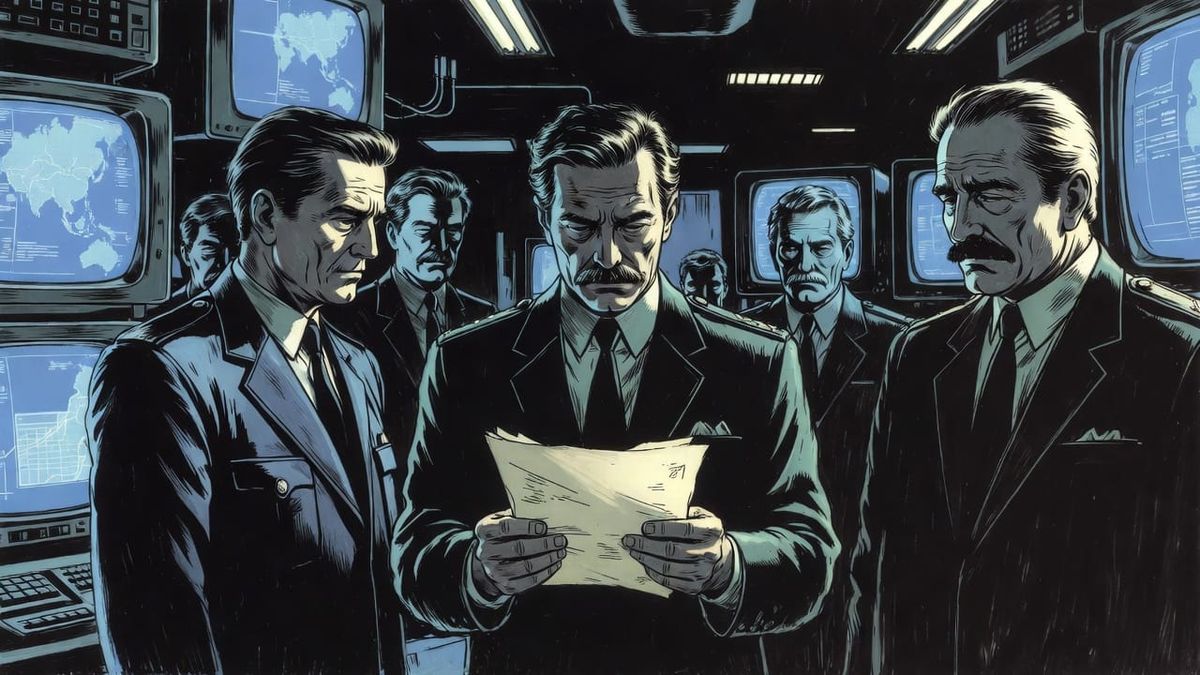
The war did not begin with missiles. It began with a memo.
Approximately ten days after September 11, 2001, a Pentagon general showed General Wesley Clark a classified document describing plans to "take out seven countries in five years, starting with Iraq and then Syria, Lebanon, Libya, Somalia, Sudan, and finishing off Iran".
Twenty-five years later, that memo has been executed. Iraq was invaded in 2003. Syria endured a decade of proxy warfare and then regime collapse. Lebanon's Hezbollah fought multiple wars with Israel. Libya was bombed into regime change. Somalia received US military intervention. Sudan experienced political transformation. And on February 28, 2026, the United States and Israel launched joint strikes on Iran codenamed Operation Epic Fury and Roaring Lion, including the assassination of Supreme Leader Ali Khamenei and key military commanders.
The 2026 Iran War was not a response to Iranian aggression. It was the completion of a strategic roadmap drawn up within weeks of the most traumatic terrorist attack in American history. Understanding this requires tracing the documented patterns across a quarter-century of military intervention, diplomatic manipulation, and economic warfare. The thesis is straightforward: this war was planned, not improvised; executed across decades, not days; and aimed at Iran from the beginning, not as a reaction to current events.
The Documented Blueprint
Clark's account of the September 2001 memo is significant not because it reveals a conspiracy, but because it matches the actual sequence of events that followed. The memo was not aspirational; it was operational planning that would shape two decades of foreign policy. Each target on the list received sustained attention from US military and intelligence apparatus.
The sequencing reveals strategic logic that becomes clearer in retrospect. Iraq came first because removing Saddam Hussein would eliminate a potential Iranian counterweight in the region and establish US military dominance over the world's most important oil reserves. Iraq's removal also meant that any future conflict with Iran would not need to account for a hostile but secular Arab state between American forces and Iran.
Syria was critical for different reasons. The Assad regime represented Iran's primary regional ally and a land bridge to Hezbollah in Lebanon. That corridor, running from Tehran through Baghdad through Damascus to Beirut, was the structural foundation of Iranian regional power projection. Without it, Iranian forces would need to cross open ocean or transit Turkey and Jordan, both hostile routes.
The subsequent targeting of Lebanon, Libya, Somalia, and Sudan follows similar strategic logic. Each represented either Iranian influence to be contained, strategic position to be denied, or demonstrated precedent to be established. The memo's completion was always the war in Iran; everything else was waypoints along the route.
When the Assad regime collapsed in late 2024, Iranian strategic depth collapsed with it. The land bridge that had allowed Iran to project power while avoiding direct confrontation was severed. Within two years, the direct strikes that Iran had spent decades deterring had become reality. The absence of the Syrian corridor made Iranian retaliation more difficult and American action less costly.
The Iraq Foundation
The 2003 invasion of Iraq was the central front in the seven-country plan, and its consequences shaped everything that followed for two decades. The war was launched on claims of imminent weapons of mass destruction, claims that US intelligence agencies knew were not supported by the evidence. Iraq's nuclear program had been dismantled in 1991 following the Gulf War. United Nations inspectors had verified this destruction. No weapons were found after the invasion despite intensive searching.
The human cost was staggering and continues to accumulate. According to Iraq Body Count, between 103,000 and 114,000 civilian deaths were recorded from the invasion through 2011. The US military death toll exceeded 4,800, with tens of thousands more wounded. Economic costs surpassed $2 trillion, diverting resources from domestic investment and other foreign policy priorities.
What Iraq provided in return is subject to ongoing debate. The war eliminated a secular Arab state that had served as a buffer against Iranian influence, though it also created the security vacuum that allowed ISIS to emerge, which then required additional military intervention. The war demonstrated American willingness to use overwhelming military force against any government in the region, a demonstration that both deterred some potential adversaries and motivated others to pursue asymmetric capabilities.
The war's defenders argued it was necessary regardless of the weapons of mass destruction (WMD) justification. The removal of Saddam Hussein, regardless of how it was achieved, reduced a potential threat and demonstrated US power in a region where American credibility had been damaged by the Vietnam experience. Whether this demonstration was worth the cost remains contested. What is clear is that the Iraq invasion was not an improvisation born of 9/11 rage. It was the execution of a documented plan that had been circulating in Pentagon planning documents since at least September 2001, as evidenced by the consistency between Clark's account and the actual sequence of events.
The Iraq experience also shaped American political capacity for future interventions. The financial cost contributed to domestic infrastructure neglect. The military cost in casualties and equipment strained force readiness. The political cost in public support limited presidential options. These constraints did not prevent the 2026 Iran war, but they shaped its execution and the domestic political context within which it occurred.
The Afghanistan Occupation
The invasion of Afghanistan in October 2001 had legitimate justification under international law. The Taliban regime was harboring al-Qaeda, which had just killed nearly 3,000 Americans in the worst terrorist attack in world history. The attack was authorized by United Nations Security Council resolution and supported by a broad international coalition including NATO allies.
What followed was not the targeted operation needed to dismantle al-Qaeda, but a twenty-year nation-building occupation that became the longest war in American history. When US forces finally withdrew in August 2021, the Taliban had reclaimed power within days, and American diplomats fled Kabul as the government collapsed.
Instead, Afghanistan may have paradoxically enabled the Iran war. The withdrawal created a narrow window of military availability and political will that advocates of confrontation with Iran could exploit. The experience of two decades in Afghanistan demonstrated both the limits of American power and the political difficulty of sustained occupation. But rather than producing restraint, these lessons were interpreted as reasons for decisive short-duration action before domestic political constraints reasserted themselves.
The Afghanistan withdrawal was also strategically significant in terms of regional positioning. American forces had been stationed in Central Asia and the Persian Gulf for two decades. That presence could be redirected toward Iran-specific planning. The logistical infrastructure built for Afghanistan remained available for operations in the region. And the political momentum of having demonstrated sustained commitment in one theater translated into pressure to demonstrate resolve in others.
The Nuclear Diplomatic Cycle
Iran's nuclear program became the central justification for sustained pressure against Iran, but this justification evolved significantly over time and serves as an example of how threat narratives adapt to strategic requirements rather than reflecting objective conditions.
Iran had begun its nuclear program with explicit US assistance under the Atoms for Peace program in 1953, during the era of US-Iran alliance under the Shah. The Eisenhower administration saw nuclear technology as a way to prevent Soviet influence and cement American partnership with Iran. The Shah's government pursued nuclear power with American support as a bulwark against Soviet encroachment.
After the 1979 revolution, Iran pursued nuclear technology independently, eventually developing enrichment capabilities that Western governments claimed were cover for weapons development. This claim requires examining the timeline carefully. Iran had revealed its nuclear facilities to international inspectors and was party to the Nuclear Non-Proliferation Treaty, which required full disclosure and allowed development of peaceful nuclear technology.
The Joint Comprehensive Plan of Action (JCPOA) negotiated in 2015 provided a framework under which Iran limited enrichment in exchange for sanctions relief. International Atomic Energy Agency (IAEA) inspectors repeatedly certified Iranian compliance with the agreement's terms. The verification regime under JCPOA was more intrusive than any previously negotiated arms control agreement, with inspectors having access to all declared sites and a process for challenging any facility suspected of hosting undeclared activities.
Iran exceeded pre-JCPOA enrichment levels only after the Trump administration withdrew from the agreement in 2018 and reimposed maximum pressure sanctions. This sequence matters critically for understanding responsibility. Iran did not violate the nuclear agreement while it was in force. The violations came after the US invalidated the agreement unilaterally, demonstrating that Iranian compliance was contingent on reciprocal American commitment.
The nuclear justification for the 2026 war therefore shares the same structure as the WMD justification for Iraq. In both cases, the stated concern about weapons of mass destruction preceded the military action but was not the primary driver of decisions made years earlier based on other strategic calculations. In both cases, the claimed threat had to be understood in the context of the actual strategic objective: regional dominance through regime change.
The Soleimani Escalation
Qasem Soleimani commanded the Islamic Revolutionary Guard Corps (IRGC) Quds Force, the special operations division responsible for extraterritorial military operations. Western intelligence agencies described him as the single most powerful operative in the Middle East, orchestrating Iran's network of proxy forces across Iraq, Syria, Lebanon, Yemen, and Palestine. His death would have been unthinkable before 2020.
Soleimani was killed by US drone strike on January 3, 2020, at Baghdad International Airport. The strike was ordered by President Trump and represented a significant escalation from the proxy warfare that had characterized US-Iran conflict for decades. No legal justification was provided beyond vague references to imminent threat, and legal analysts across the political spectrum questioned whether the strike met the legal standard for self-defense.
Iran had long maintained that direct attacks on Iranian soil would trigger direct retaliation. The 1979 revolution had created a political culture in which nationalist resistance to American pressure was a foundational principle. Iranian leaders understood that appearing weak in the face of American threats would undermine their domestic legitimacy and regional influence.
After Soleimani's assassination, Iran launched ballistic missiles at US bases in Iraq, injuring over 100 American personnel. But the direct exchange stopped there. Iran did not pursue the kind of sustained military response that might have triggered broader conflict. This restraint revealed both the strength and weakness of Iran's proxy strategy.
Proxy forces had allowed Iran to project power while maintaining deniability and avoiding direct confrontation with the American military, which Iran recognized it could not defeat in direct engagement. But that same structure meant Iran could not easily convert its regional influence into direct military response when challenged. The proxy capability was designed for escalation through proxies, not direct exchange of fire.
The Soleimani killing normalized the direct targeting of Iranian officials without triggering the regional war Iran had spent decades preparing to avoid. This normalization was strategically significant. If the assassination had triggered the war Iran said it would, the war would have come earlier under conditions less favorable to American planning. The restraint that avoided earlier conflict created conditions in which later conflict became more likely.
The Maximum Pressure Campaign
Economic warfare preceded kinetic warfare in the Iran strategy as it had in the Iraq strategy. The maximum pressure campaign launched after the JCPOA withdrawal was explicitly designed to collapse the Iranian economy before military action, consistent with the pattern established in the 1990s sanctions against Iraq.
Sanctions had been a feature of US-Iran policy since the 1979 revolution, but the post-2018 campaign was qualitatively different from previous iterations. The Obama-era sanctions had been designed to bring Iran to the negotiating table and had targeted specific sectors while allowing humanitarian exemptions. The Trump administration sanctions were designed to cause economic collapse and regime change, targeting all sectors including humanitarian trade and medicine procurement.
Treasury Secretary Scott Bessent described the Iranian currency collapse in December 2025 as the "grand culmination" of this strategy. His choice of words was precise and revealing. The maximum pressure campaign was not separate from military planning. It was the first phase of coordinated strategy to weaken Iran before direct military intervention.
This pattern matches the Iraq sanctions regime of the 1990s, which devastated civilian infrastructure while failing to remove Saddam Hussein. The sanctions created humanitarian catastrophe and anti-American radicalization without achieving their stated objectives of regime change. The lesson drawn by sanctions architects was not that economic warfare failed but that it had not been applied sufficiently forcefully or for sufficient duration.
Maximum pressure applied to Iran represented the iteration that would succeed where previous sanctions had supposedly failed. The strategy assumed that sustained maximum pressure would produce domestic political collapse, removing the need for direct military intervention or producing conditions more favorable to intervention. When the currency collapse came in late 2025, administration officials treated it as vindication of strategy rather than humanitarian catastrophe.
The Syria Collapse
Iran's most significant strategic loss before the 2026 war was not military but diplomatic and geographic. The fall of the Assad regime in late 2024 eliminated Iran's most important regional ally and severed the land bridge to Hezbollah that had been fundamental to Iranian regional strategy for decades.
Iran had invested decades in supporting Assad. Quds Force commanders coordinated Russian, Iranian, and Hezbollah forces to prevent regime collapse during the civil war. Soleimani personally managed the military coalition that kept Assad in power through the most critical periods of the conflict, traveling to Moscow to secure Russian intervention and coordinating battlefield operations across multiple fronts simultaneously.
When that investment collapsed, Iranian regional influence collapsed with it. The land bridge had allowed Iran to supply Hezbollah without direct Israeli interdiction. Iranian military advisors stationed in Syria could be rotated through contiguous territory. The strategic depth that had allowed Iran to project power through proxies while maintaining distance from direct confrontation was reduced to nothing.
The 2026 war came within two years of this regional realignment. US and Israeli military planners had long understood that attacking Iran directly would be more costly if the land bridge remained intact. The proxy forces Iran had cultivated could respond to an attack on Iran itself from multiple directions, complicating any strike planning. After Syria's fall, those forces were isolated and vulnerable to separate reduction.
Iran's loss of Syria also eliminated the diplomatic cover that Assad's regime had provided. While the international community had criticized Iranian involvement in Syria, the presence of a recognized government provided some legal framework. With Syria now under different governance, the legal and diplomatic context for Iranian regional presence had fundamentally changed.
The Pattern Recognition
Looking across the full timeline from September 2001 to February 2026, the strategic through-line becomes clear. The memo described a regional transformation, and every major US action in the Middle East for the subsequent twenty-five years served that objective either directly or indirectly.
Afghanistan established military presence adjacent to Iran and tested the limits of American willingness to sustain intervention. The lessons learned from Afghanistan, both positive and negative, shaped subsequent operational planning. The logistical infrastructure built for Afghanistan remained available for regional operations.
Iraq removed a potential ally and demonstrated US willingness to use force against any government in the region, regardless of international opposition or stated justification. The war also consumed military bandwidth and political capital that might have been directed toward Iran, suggesting either that the planning for Iran was secondary or that the administration understood Iraq would facilitate later Iran action.
The Syria intervention prevented another ally from consolidating while also weakening Hezbollah through the attrition of the civil war. The US role in Syria was more limited than in Iraq, focusing on specific threats like ISIS while allowing Russia and Iran to bear the costs of propping up Assad until his eventual fall.
The Soleimani killing removed Iran's primary military coordinator and normalized direct targeting of Iranian officials. This was a threshold crossing that previous administrations had avoided despite pressure from regional allies. The normalization meant subsequent strikes would face less political resistance.
Maximum pressure weakened the Iranian economy and domestic political structure in preparation for whatever military action followed. The currency collapse was treated as vindication of strategy rather than humanitarian crisis, demonstrating the willingness to accept civilian suffering as a mechanism of state transformation.
Each step was justified on its own terms with its own political and security rationale. Afghanistan was about terrorism. Iraq was about WMDs. Syria was about chemical weapons and humanitarian catastrophe. Soleimani was about deterrence. Maximum pressure was about nuclear weapons. The composite effect, however, was always regime change in Iran.
This does not mean every administration shared the same conscious objective or even understood the broader strategy. Different presidents brought different priorities and levels of commitment to the Middle East. Some focused on domestic transformation, others on great power competition. But the structural incentives pointed consistently in the same direction regardless of stated intentions.
Military contractors benefited from sustained conflict. Regional allies pushed for confrontation. Intelligence agencies maintained threat inflation to preserve budgets and influence. Defense intellectuals built careers explaining why the threat was serious. And the institutional momentum of a strategy once chosen carried forward regardless of the original rationale.
The Questions That Remain
The historical record raises questions that cannot be definitively answered from public sources. These questions matter for understanding current events and anticipating future developments.
Would the JCPOA have prevented the 2026 war if it had been maintained? Iranian compliance was verified by international inspectors repeatedly. The agreement provided more verification of Iranian nuclear activities than existed for any other country under arms control agreements. But critics argued it merely delayed Iranian nuclear progress while providing sanctions relief that funded regional expansion. The 2018 withdrawal suggests the US never genuinely accepted diplomatic coexistence with Iran regardless of agreements or verification. If the objective was always regime change, diplomatic agreements were merely tactical pauses, not genuine solutions.
What role did regional allies play in driving toward war? Israeli and Saudi pressure on US administrations to confront Iran was sustained and consistent across decades. The joint strike in 2026 represented the achievement of decades of allied lobbying. Whether this pressure determined US policy or simply aligned with pre-existing strategic calculations cannot be determined from public sources. The relationship between allied pressure and US decision-making is probably more circular than linear: allies pushed because they sensed receptivity, and US receptivity was demonstrated through responses to allied pressure.
How did decision-makers internalize the original memo? Did they see it as a binding commitment to execute or as aspirational planning? The consistency of outcomes suggests something more than coincidence, but decision space between 2001 and 2026 involved thousands of choices by different individuals with different levels of awareness of the broader strategy. Some may have understood the full picture; others may have made seemingly independent decisions that fit a pattern they did not recognize.
What does this history suggest about US credibility in diplomatic agreements? The JCPOA was negotiated by the US with other governments and signed by the US under international law. It was abandoned by the US unilaterally without evidence of Iranian violation. Any future negotiation with the US must account for demonstrated willingness to invalidate agreements once domestic political calculus shifts. Adversaries now understand that US commitments expire with administrations.
How should Iranian leadership have interpreted twenty-five years of consistent US policy? If every US administration, regardless of party or stated intentions, moved consistently toward the same objective, rational Iranian behavior would have been to assume the objective was permanent regardless of diplomatic engagement. The lesson from Iranian perspective may have been that engagement was futile, that only deterrence or nuclear capability provided security. This interpretation would suggest that Iranian nuclear advancement was rational response to demonstrated American hostility, not aggressive ambition.
The Documentary Record
The through-line from the September 2001 memo to the February 2026 strikes is consistent with documented events. The memo's existence is confirmed by Clark's account and by the pattern of subsequent US actions. The theory that this was all coincidence or separate unconnected decisions strains credulity against the weight of evidence.
This analysis does not claim to reveal classified information or to possess special insight into decision-maker intentions. It traces documented patterns in public record and identifies structural forces that shaped outcomes across multiple administrations with different stated priorities and political bases.
The value of historical analysis is not certainty about causes but coherent explanation of effects. A theory that fits all known facts is preferable to one that requires multiple coincidences or post-hoc rationalizations. The theory that the Iraq invasion was part of a longer strategic plan toward Iran fits facts better than the theory that each intervention was separate and unrelated.
The war that began in February 2026 did not happen to Iran. It was implemented against Iran through phased execution of a plan that had been circulating in some form since at least September 2001. Understanding this does not determine policy positions or moral judgments about the conflict. It simply establishes the factual context within which current events occur and suggests that policy discussions should account for structural factors rather than focusing solely on immediate precipitants.
What happens next, in the war itself and its aftermath, will generate its own documentary record. Future analysts will trace their own through-lines and identify their own patterns based on sources not yet available. This account represents one interpretation of documented history, offered in the hope that structured analysis of the past provides some useful framework for understanding the present and anticipating the constraints that will shape future options.
The memo General Clark described was not destiny. History is made by human choices within structural constraints. Understanding those constraints, and how previous choices created them, is the work of historical analysis. What happens after February 2026 depends on choices not yet made, constrained by but not determined by what came before.